

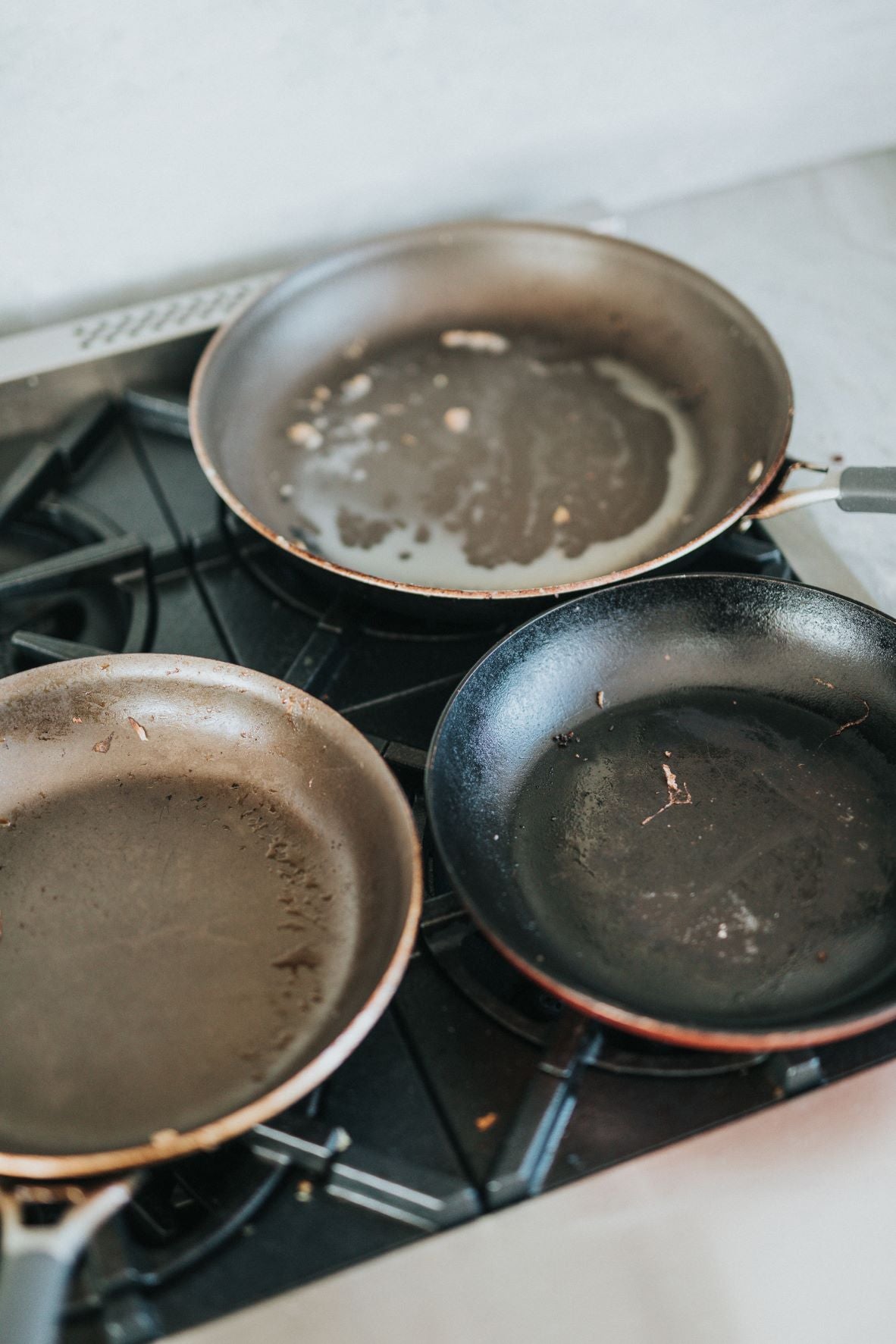
Once you have finished cooking with a frying pan, most people would probably be inclined to pour the cooking fat down the kitchen sink or straight into the bin, but you should not do this! If you choose to pour cooking fat or oil straight into the bin, you could risk attracting insects, creating a new problem. If you pour it down the kitchen sink instead, the organic matter from fat and food scraps will solidify over time. This will form a layer that sticks to the inside of the drain and blocks it. This problem can occur in both new and old drainage systems.
How to dispose of different types of cooking fat
Now that we know not to dispose of cooking fat or oil directly, the natural question is: where should it go? The answer is the bin, but not straight into it. Before putting cooking fat or oil in the bin, a little preparation is needed, and there are different ways to do this depending on the type of cooking fat:
Cooking fat
Cooking fat is probably one of the worst things you can put down a kitchen sink. By cooking fat, we mean butter, margarine and the fat from foods such as bacon. This is because it can solidify and easily stick inside the pipes. The correct approach is therefore to dispose of cooking fat in a bin, but not directly. Once you have finished cooking, you should let the frying pan and fat cool until the fat has solidified. You can then put it in a container such as a used milk carton, aluminium foil or a plastic bag, which you then put in the bin. Afterwards, you can wipe the remaining fat off the frying pan with some kitchen paper.
If you find this process too slow, you can also pour the cooking fat into a cup, put it in the fridge or freezer and let it solidify before putting it in a container or plastic bag.
Oil / Deep-frying oil
If you have used sunflower oil, olive oil or something similar, the process is much the same as described above. Unlike cooking fat, however, oil will take considerably longer to solidify. You should therefore simply leave the oil to cool before putting it in a container or bin. If you have not used much oil for cooking, you can simply wipe the frying pan with kitchen paper and then put the kitchen paper in the bin before washing the frying pan.
How to clean a drain blocked by cooking fat
If you take good care of your kitchen sink, you should not experience a blocked drain, but this is not guaranteed. It is virtually impossible to prevent food scraps, cooking fat or oil from ever going down the drain, and over time this can form a layer of grime and block it. If you find yourself in this situation, we have some tips that may save your day and get your drain working.
To clean your drain, you will need 1 dl. of baking powder, 1 dl. of vinegar and boiling water. Start by pouring the baking powder down the drain, then pour in the vinegar and let the baking powder and vinegar foam for at least five minutes. Then pour in the boiling water. This should help and should clear the drain. If the water still does not flow normally after the first treatment, you can try it a few more times. Use this cleaning method at your own risk.
There are also situations where the tip above does not work. If, for example, the water still does not flow normally after you have tried the method several times, this suggests that you need to take more drastic action. You will need to work under the sink and disconnect the trap, as this is usually where the grime collects. It is important to place an empty bucket underneath the trap before loosening it at both ends so that any excess water can be collected in the bucket. Once the trap is disconnected, you can begin cleaning it. Refit it when you have finished, and hopefully the water will flow normally again. As well as avoiding putting food scraps, fat or oil down the kitchen sink, you can pour boiling water down the drain to loosen dirt, bacteria and grime three to four times a month. This can also help prevent your drain from becoming blocked.
If none of the above has any effect, this could indicate that you need professional help. You should contact a plumber who can help you with the blocked drain.


